Japan Digital Nomad Visa for Americans (2026 Guide)
Apply for Japan's 6-month Digital Nomad Visa as a US citizen. Income proof, insurance, family rules, US tax reality, and the no-Residence-Card logistics.
General information, not legal or tax advice — see full disclaimer .
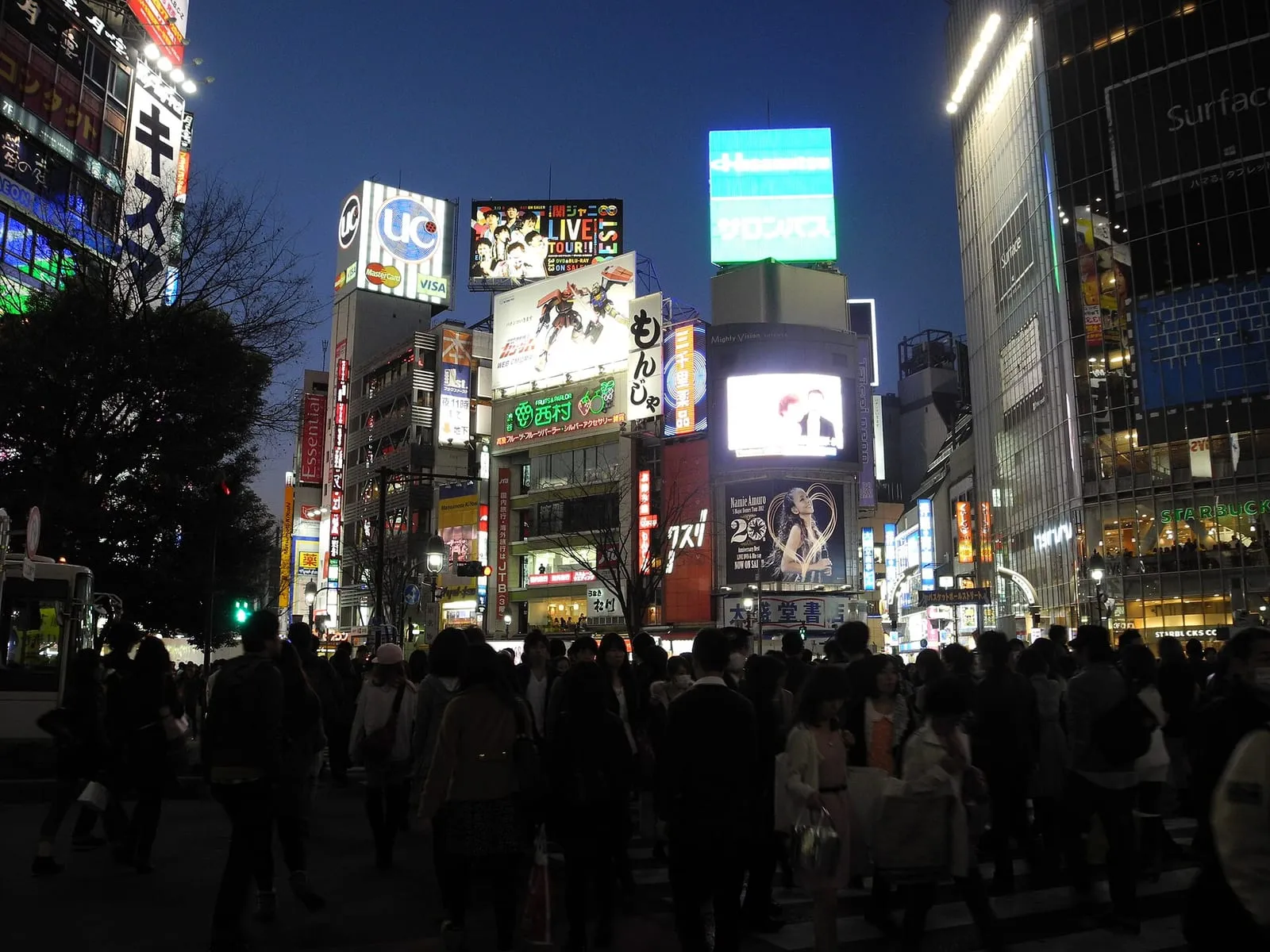
Reader, before you start: this article assumes you are a US citizen, plan to stay in Japan between 91 days and 6 months, and work remotely for clients or an employer outside Japan. If you are staying 90 days or fewer, you do not need this visa — use the existing 90-day visa-exempt entry. If you want to stay longer than 6 months or work for a Japanese company, this is the wrong visa for you.
What this guide covers
Japan launched a Digital Nomad Visa in early 2024 (MOJ ISA — Designated Activities). The official pages tell you the rules. They do not tell you which of your US income types qualify as proof, what your US tax filing actually looks like during and after the stay, or what it means in practice to live in Japan for half a year without a Residence Card.
This guide closes those gaps for US applicants.
- Confirm you actually qualify, including which type of US income counts and what insurance the consulate accepts
- Walk through the application from your US consulate, end to end
- Plan for the US tax side, the family side, and the day-to-day logistics of a visa that does not issue a Residence Card
Are you actually eligible
The visa is technically a “Designated Activities” status under Notification No. 53 for the primary applicant and Notification No. 54 for a dependent spouse or child (MOJ ISA — Designated Activities). Five things have to be true.
- Eligible-country passport. The United States is on the list, which covers around 50 nationalities — broadly, countries with a tax treaty with Japan and a bilateral entry arrangement. For a US citizen, this is the easy box.
- Annual income of at least ¥10,000,000. That is about $67,000 USD at recent exchange rates, judged on your most recent annual gross income. The income must be active — earned from work, not from passive investments. A retiree living off dividends does not qualify even if the dividends clear ¥10M. A self-employed software consultant invoicing US clients does.
- Income from outside Japan only. You work for an employer or clients based outside Japan. Providing services to Japanese companies is explicitly prohibited. One Japanese-corporation contract on your books and the application is at risk.
- Private health insurance covering at least ¥10,000,000 for medical treatment of injury and illness. Most standard US employer health plans do not provide international coverage at this threshold, and even those that do rarely produce certificates in a format Japanese consulates accept. Plan to buy a dedicated nomad or expat policy — $300 to $800 USD for six months of coverage.
- Stay no longer than 6 months. The visa starts the day you enter Japan, cannot be renewed or extended inside the country, and triggers a 6-month cooldown outside Japan before you can reapply. This cooldown is the rule, not a guideline.
What kind of US income counts
The MOJ page calls for “tax certificates, income certificates, employment contracts, or contracts with business partners showing income amount.” That is generic. The realistic US-specific mapping below is what consulates see in practice — but confirm with your assigned consulate before submitting, because document acceptance is at the visa officer’s discretion.
| Your situation | Primary income proof | Supplementary documents the consulate may request |
|---|---|---|
| W-2 remote employee | Most recent Form W-2 + Form 1040 + letter from employer confirming remote-work-from-Japan permission, salary, and contract length | Pay stubs (last 3 months), employment contract, employer’s business registration |
| 1099 contractor (sole proprietor) | Form 1040 + Schedule C + recent 1099-NEC forms from clients | Active client contracts, business bank statements (last 6 months), invoices |
| Single-member LLC owner | Form 1040 + Schedule C (the LLC is a disregarded entity for tax) + LLC formation documents + business bank statements | Active client contracts, EIN assignment letter, state filing certificate |
| Multi-member LLC or partnership | Schedule K-1 + Form 1040 + first page of Form 1065 | Operating agreement, business bank statements, recent invoices |
| S-corp owner-operator | Form W-2 from your S-corp + Schedule K-1 + Form 1040 + first page of Form 1120-S | Articles of incorporation, business bank statements |
One detail that trips up self-employed applicants: a single year’s tax return is not always enough. If your most recent 1040 shows a number close to the ¥10M threshold and the year before it was much lower, expect a supplementary request — typically six months of business bank statements or current client contracts that demonstrate ongoing income, not a one-time spike.
US tax forms in English are usually accepted at US consulates without sworn translation, but this is not guaranteed in writing on the MOJ page. If your consulate’s checklist mentions Japanese translation, factor it in.
How to apply from the US
Japan has an embassy in Washington DC and consulates across the country. You apply at the consulate with jurisdiction over your state of residence — Boston covers New England, New York covers the Mid-Atlantic, San Francisco covers Northern California and several Western states, and so on. The full list is on the Embassy of Japan in the US visa page. You cannot pick freely; filing at the wrong consulate is grounds for rejection.
The application goes one of two ways: with a Certificate of Eligibility (COE) issued in advance by Japan’s Immigration Services Agency, or directly at the consulate. Both end in the same visa stamp.
- Confirm your consulate and download its checklist. Every US consulate publishes its own document list for Designated Activities (Digital Nomad). Differences between consulates are small but real — extra cover letters, photocopy-plus-original rules, photo-size specs to the millimeter. Use yours, not a generic third-party list.
- Decide on the COE path. A COE means you or a contact in Japan submit to a regional immigration office first. The COE itself takes 30 to 60 days from abroad (the MOJ reported a 48.4-day average in early 2026; verify on the MOJ statistics page). With a COE the consulate step is fast — 5 business days. Without one, direct consulate processing runs 1 to 3 months. Most US applicants without a Japan contact apply directly.
- Assemble the document package. Passport, completed application form with photo, income proof from the table above, employer letter or business documents, insurance certificate showing ¥10M coverage, and any supplementary documents your consulate lists.
- Book the consulate appointment. Most US consulates accept online bookings; some require email. Slots fill weeks ahead in March–May and October–November. Book before every document is finalized.
- Submit and wait. The consulate reviews on the spot or requests more. Fees run about ¥3,000–3,300 for single-entry and ¥6,600 for multiple-entry, paid in USD at the consulate’s rate (MOFA — Visa fees). Expect a few business days without your passport while the visa is stamped.
- Enter Japan within 3 months of issue. The visa is single-entry by default, valid for 3 months from issue — you must enter inside that window. The 6-month clock starts on your entry date. Register on Visit Japan Web at least 6 hours before landing to use the joint immigration-and-customs kiosk at Haneda, Narita, or Kansai.
Costs and timeline
| Item | Cost | Timeline | Source |
|---|---|---|---|
| Visa fee (single-entry) | ~¥3,000–3,300, paid in USD at consulate rate | At submission | MOFA — Visa fees |
| Visa fee (multiple-entry) | ~¥6,600 | At submission | MOFA — Visa fees |
| Certificate of Eligibility (optional) | No MOJ fee; agent fees if filed in Japan | ~30–60 days from abroad (MOJ Jan 2026 average: 48.4 days) | MOJ ISA — processing statistics |
| Direct consulate processing (no COE) | (Same as visa fee) | 1–3 months | US consulate pages — verify yours |
| Private health insurance (6 months, ≥¥10M coverage) | $300–800 USD | Before submission | Insurance provider quotes |
| Document translation (if your consulate requires) | $20–100 per document | Days to 2 weeks | Translation services |
Tax — both sides
This is the part most US-targeted articles skip or get wrong. The visa creates a specific tax position, and the US side is different from a European applicant’s.
Japan side: no Japanese tax on your foreign income
A DNV stay is six months or less by definition. Anyone in Japan for fewer than 183 days in a calendar year is a non-resident for Japanese tax purposes (Japan National Tax Agency — Outline of Japan’s Tax System). Non-residents pay Japanese tax only on Japanese-source income — and the visa requires all your income come from outside Japan. Your DNV-period earnings are not taxable in Japan.
Edge case: if your stay spans two calendar years, you can stay under 183 days in each and remain a non-resident on both. If it crosses 183 days in one calendar year — possible with the right timing — non-resident treatment can shift. Stays touching both halves of a calendar year are worth running past a tax preparer.
You do not enroll in Japan’s National Health Insurance during a DNV stay; the visa excludes you from NHI (MOJ ISA — Designated Activities). Your private policy is your healthcare.
US side: you still file a 1040
The United States taxes its citizens on worldwide income regardless of where they live. Six months in Japan does not change that. You file Form 1040 and report every dollar earned worldwide (IRS — US Citizens and Resident Aliens Abroad).
The FEIE trap
Many readers will assume that working from Japan qualifies them for the Foreign Earned Income Exclusion (FEIE), which can exclude up to about $130,000 of foreign-earned income from US federal tax in 2025 (IRS — Foreign Earned Income Exclusion). It usually does not.
FEIE requires either the Bona Fide Residence Test (full uninterrupted tax year as a foreign-country resident — the DNV cannot satisfy this, since it caps at six months and explicitly does not make you a Japanese resident) or the Physical Presence Test (330 full days outside the US in any 12-month period). Six months in Japan gives you about 180 days outside the US. To clear 330, you would need substantial additional time outside the US before or after your Japan stay.
If you live in the US the rest of the year and the DNV is your only foreign stretch, you will not qualify for FEIE on that income. You owe US tax at your normal rates. The DNV is a permission slip to work from Japan; it is not a US tax holiday.
The interaction between the DNV, the FEIE, and the US-Japan tax treaty gets specific to your circumstances quickly. If the dollar amount matters, talk to an Enrolled Agent or CPA who handles US expats — not your regular accountant.
Bringing your family
The visa allows your spouse and minor children to accompany you under the dependent Designated Activities visa, Notification No. 54 (MOJ ISA — Designated Activities). Unlike most European nomad visas, dependents do not need separate income — your ¥10M covers the family.
The fine print:
- Legal marriage only. The spouse must be in a marriage legally recognized in your country of citizenship and documentable through standard records (marriage certificate, joint registration). De facto and common-law partners are not covered. Same-sex partners face a paperwork-level issue: Japanese immigration uses its own family-status documentation chain and does not currently recognize same-sex marriages at that level, even where they are legal in the US. Confirm with your consulate before assuming this works for your case.
- Children must be minors. Biological or adopted children under the age of majority qualify; adult dependents do not.
- Dependents cannot work independently. A spouse on the dependent DNV cannot take separate employment or run their own remote business under that status.
- Same clock as the primary. Dependent visas end when yours does.
Living in Japan without a Residence Card
A DNV holder is not eligible for a Residence Card (MOJ ISA — Designated Activities). This is the single biggest practical difference between the DNV and longer-term work visas, and it changes how you set up daily life.
Banking
You cannot open a standard Japanese bank account — MUFG, SMBC, Mizuho, and Japan Post Bank all require a Residence Card and registered address. The working setup for most US visitors:
- Wise multi-currency account or card. Holds JPY and USD, spends at the local rate without stacking conversion fees. The default for short-term nomads in Japan.
- Revolut or another multi-currency card as a backup.
- US credit cards with no foreign transaction fees — Chase Sapphire Preferred, Capital One Venture, similar.
- Cash. Japan is more cash-friendly than the US. 7-Eleven ATMs are the most reliable for foreign cards.
Housing
Standard apartment leases are off the table — landlords want a Residence Card, guarantor, and registered address before signing. The realistic options:
- Monthly mansion (mansurii). Furnished apartments rented by the month, common in Tokyo, Osaka, Kyoto, and Fukuoka. Operators include MonthlyMansion, Sakura House, and Oakhouse.
- Share house or co-living. Furnished rooms in a shared building, often with a co-working area.
- Long-stay Airbnb. Many hosts offer 30%+ monthly discounts. Confirm the listing is licensed under Japan’s Minpaku law — unlicensed listings can be shut down mid-stay.
- Serviced apartments. Higher cost, but utilities, internet, and weekly cleaning are handled. Useful for the first few weeks.
Mobile and internet
No Residence Card means no domestic post-paid contract. Use:
- eSIM (Airalo, Saily, Ubigi) — Japan-specific data plans, activated on arrival.
- Tourist SIM at Narita, Haneda, or Kansai arrivals — Mobal and Sakura Mobile sell month-by-month plans aimed at non-Residence-Card holders.
For home internet, your monthly mansion or share house will usually include Wi-Fi. If not, pocket Wi-Fi rentals (Japan Wireless, Ninja WiFi) cover a 6-month stay at about $20 to $40 per week.
What you can and cannot do
You can join chain gyms by the month with passport ID, get a Suica or Pasmo IC card for transit, and sign up for coworking spaces (WeWork, The Hive, regional spaces) with passport plus credit card. Note: you cannot buy a JR Rail Pass — that requires a “Temporary Visitor” entry stamp, which the DNV does not give you. Pre-buy a regional pass instead, or pay as you go on IC.
You generally cannot get a domestic phone contract, a long-term apartment lease, a Japanese bank account, or a domestic credit card. Workarounds exist for each, but none of them replace what a Residence Card would give you.
Common reasons applications get rejected
The MOJ does not publish a rejection-reason breakdown specific to the DNV. From consulate guidance and immigration-lawyer commentary, these come up most often.
- Income proof is recent but not continuous. A single 1040 with a number above ¥10M is not always enough if the prior year was well below. Submit at least the last two tax years plus current contracts or bank statements to show the income is ongoing, not a one-off.
- Insurance certificate does not show ¥10M coverage clearly. A US employer health plan summary letter is not enough on its own. The consulate needs a certificate stating the ¥10,000,000 (or equivalent in USD) medical coverage figure in writing, in English, valid for the full visa period.
- Employment relationship looks like it could be with a Japanese entity. If your work involves Japanese clients, even tangentially, the application can be challenged. The visa requires that your income come from non-Japanese sources. Be ready to show that your direct employer or your direct clients are outside Japan, in writing.
- Document quality. Illegible photocopies, missing pages, the wrong photo size, the wrong photo background. Use the consulate’s checklist as the source of truth for format.
- Name mismatches. Your passport name, your tax return name, and your employer letter name must match. Maiden names, middle name initials versus full middle names, and hyphenation differences cause problems.
- Filing at the wrong consulate. Each US consulate covers specific states. Apply where you live, not where you happen to be.
After 6 months
Three paths typically follow the DNV:
- Leave and reapply later. The cooldown is 6 months outside Japan. After that, submit a new application if your income still qualifies (MOJ ISA — Designated Activities).
- Move to a different long-term visa. Engineer/Specialist, Business Manager, and Highly Skilled Professional all require Japanese-side sponsorship and are separate processes. The DNV does not convert.
- Treat it as a six-month sabbatical. Many DNV applicants are not trying to relocate. The visa lets you spend half a year working from Tokyo, Osaka, or Fukuoka — legally — without changing your US residency for any other purpose. If you want something longer-term in a nomad-friendly country, the Portugal D8 visa is the other end of the spectrum: a one-to-two-year residence permit with a path to renewal.
Frequently asked questions
Do I need a Certificate of Eligibility to apply?
No. The COE is optional and primarily useful if you have a contact in Japan who can file on your behalf. With a COE, the consulate step is fast (about 5 business days), but the COE itself takes 30 to 60 days from abroad. Without one, you apply directly at your assigned US consulate and processing runs 1 to 3 months. Most US applicants apply directly.
Can I enter Japan more than once on this visa?
By default the visa is single-entry, valid for 3 months from issue — you must enter inside that window, and the 6-month clock starts on entry. For multiple-entry (for example, a weekend trip to Seoul during your stay), apply for the multi-entry version when you submit. The fee is higher and approval is not automatic.
Can my spouse work remotely on the dependent visa?
The dependent visa (Notification No. 54) covers accompanying family. Independent paid work by the spouse is not authorized. If your spouse has their own ¥10M+ income, they can apply for their own primary DNV instead.
How much US tax will I owe on my income while in Japan?
As a US citizen, your worldwide income is taxable on Form 1040 regardless of where you earn it. A six-month Japan stay alone usually does not satisfy the Foreign Earned Income Exclusion (which requires 330 days outside the US in any 12-month period). Most short-term DNV applicants owe their normal US tax rates on the income earned during the trip. If the tax bill matters, see a US expat tax specialist.
Can I bring a same-sex spouse on the dependent visa?
Probably not as of 2026. The dependent DNV requires a legally recognized marriage that documents through Japan’s family-status records. Same-sex marriages, even where legal in the US, are not currently recognized in that chain, and the MOJ has not published explicit guidance accepting them under Notification No. 54. Confirm with your consulate before assuming this works for your case.
Can I extend the visa if I love Japan and want to stay longer?
No. The 6-month limit is firm and the visa cannot be extended inside Japan. To return, you must leave for at least 6 months and then reapply. To live in Japan year-round, you need a different visa category — typically Engineer/Specialist, Business Manager, or Highly Skilled Professional — and Japanese-side sponsorship.
What happens if I overstay?
Overstay penalties in Japan include detention, deportation, and a multi-year re-entry ban. Leave before your 6-month period ends, even by a few days, and keep your departure stamp as proof.
Next steps
Before you book anything, confirm three things in writing: that your income type produces documentation your consulate’s checklist accepts, that you can buy insurance with ¥10M minimum medical coverage in a certificate you can present to the consulate, and that you have a realistic plan for housing and money inside Japan without a Residence Card. Most rejected applications and most regretful trips trace back to one of those three.
When the visa is in hand, the next item is the arrival itself. Visit Japan Web is a separate process, and the joint kiosk system at Haneda, Narita, and Kansai now handles immigration and customs in one scan — a guide for that is in progress.
Sources
- MOJ Immigration Services Agency — Designated Activities (Digital Nomad, Spouse or Child) — accessed 2026-05-25
- MOFA — Specified visa: Designated Activities (Digital Nomad) — accessed 2026-05-25
- MOFA — Visa fees — accessed 2026-05-25
- Embassy of Japan in the US — Visa — accessed 2026-05-25
- IRS — US Citizens and Resident Aliens Abroad — accessed 2026-05-25
- IRS — Foreign Earned Income Exclusion — accessed 2026-05-25
- Japan National Tax Agency — Outline of Japan’s Tax System — accessed 2026-05-25
- Visit Japan Web (Digital Agency) — accessed 2026-05-25
Tagged
- #japan-digital-nomad-visa
- #designated-activities
- #notification-53
- #us-citizens
- #remote-work
- #feie
Tools you'll likely need
Practical services for the steps in this guide. Optional — the official government route always comes first in the article above.
Disclosure: some links below may be affiliate links. If you sign up through them we may earn a commission at no extra cost to you. We only list services we'd recommend regardless, and this never changes what we write. More.
SafetyWing
Subscription travel-medical cover popular with nomads; monthly, cancel anytime.
IMG Global
US-based international medical insurer — strong fit for US citizens abroad.
Genki
Long-term travel health insurance that meets many visa cover requirements.
Cigna Global
Comprehensive international private medical insurance for longer relocations.
Read next
Keep going with related guides from the same track.
France Long-Stay Visitor Visa for US Citizens: The 2026 Guide
Live in France without working: the 2026 SMIC income benchmark in dollars, the ANEF validation step nobody explains, and the US taxes you still owe.
Spain Non-Lucrative Visa for US Citizens: The 2026 Guide
Live in Spain without working: the exact 2026 income you must show, the FBI-apostille document chain, and the US taxes you still owe.
Netherlands DAFT Visa for Americans: The Self-Employment Route (2026)
The one Dutch residence permit open only to US citizens. Who qualifies, what the €4,500 really is, the application steps, and the US taxes you still owe.