Switzerland Permanent Residency for Americans: The 5-Year C Permit
How US, UK, and Canadian citizens can get the Swiss C permit in 5 years instead of 10 — the legal basis, the language bar, and why it isn't guaranteed.
General information, not legal or tax advice — see full disclaimer .
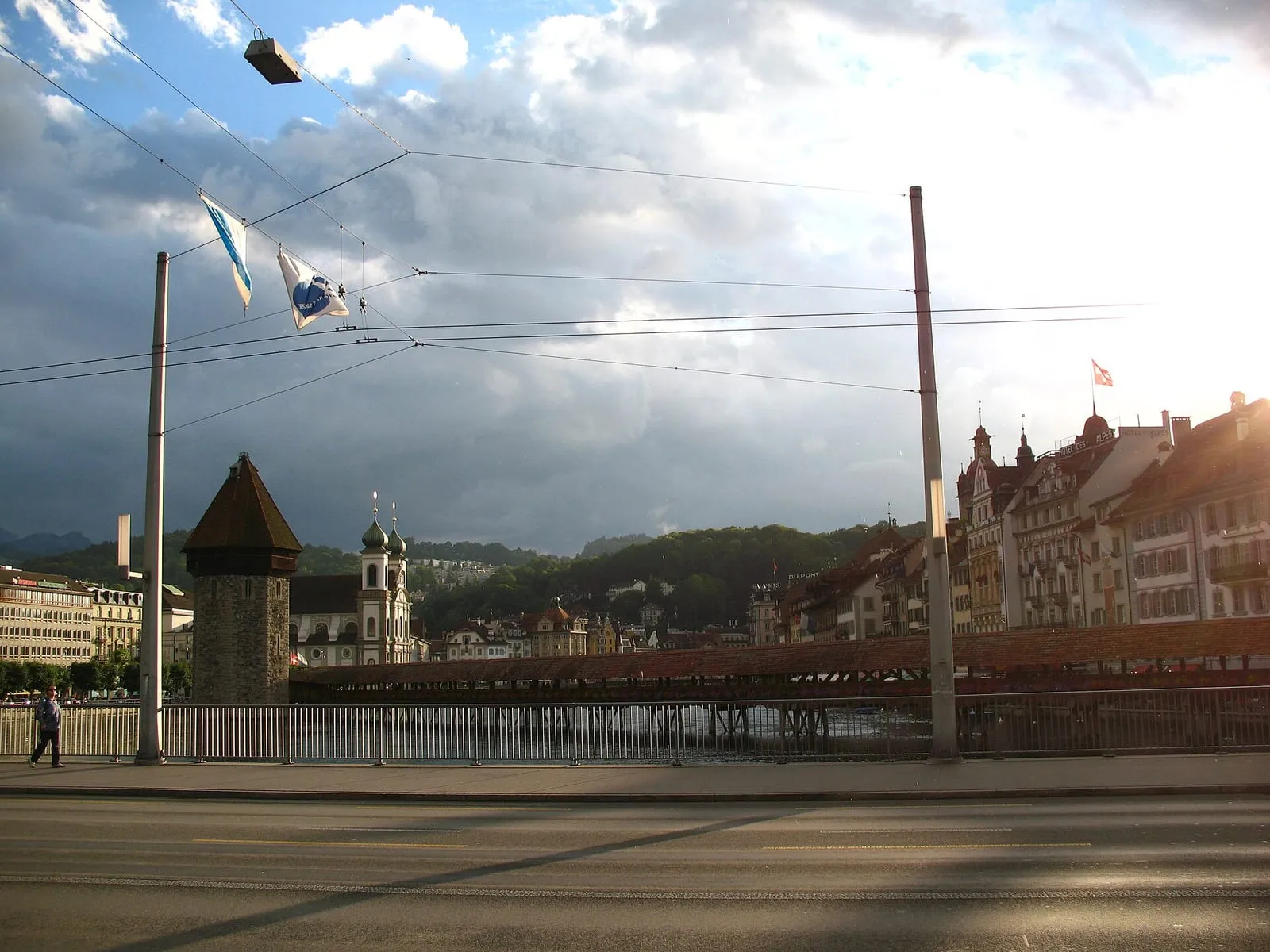
Reader, before you start: this guide is for US, UK, and Canadian citizens who already live in Switzerland on a B permit — or are about to — and want permanent residence (the C permit) as fast as the rules allow. New to the whole system? Start with how to move to Switzerland long-term, then come back here.
What this guide covers
Most third-country nationals wait 10 years for a Swiss C permit. Americans, Brits, and Canadians can apply after 5. That’s real — but it’s not a guarantee, and the fine print decides whether you actually get it.
- The 5-year rule and the catch nobody states plainly
- Exactly who qualifies (and why Australians don’t)
- What counts toward the five years — and what quietly doesn’t
- The language bar, which is higher than for the 10-year route
- How to apply, and how a C permit can later be taken away
Last verified: June 8, 2026. Cantonal practice and fees vary. Confirm with your cantonal migration office before you act.
The 5-year rule — and the catch
The legal basis is Article 34 paragraph 4 of the Foreign Nationals and Integration Act (FNIA, SR 142.20). It allows “early settlement” after five years instead of the standard ten.
Here’s the catch, and it’s the thing competing guides get wrong. The statute says a settlement permit “may be granted.” Not “shall.” Not “is entitled to.” That single word makes the 5-year C permit a discretionary decision, not a right.
This matters because of why US, UK, and Canadian citizens get the shorter clock at all. It’s not a treaty that guarantees it. About eleven European countries — Germany, France, Italy, Austria, Spain, Portugal, and others — hold actual bilateral settlement treaties, so their citizens have a legal entitlement to the C permit at five years. US, UK, and Canadian citizens are on the five-year track through a long-standing Swiss administrative practice based on reciprocity (the Swiss term is Gegenrecht). You meet the bar, you usually get it — but the cantonal authority decides, and it can say no.
You’ll see blogs cite an “1850 US–Switzerland treaty” as the reason. We couldn’t confirm that treaty grants any 5-year settlement right in the official legal texts. The honest, defensible version: you qualify under the early-settlement rule plus Swiss reciprocity practice, and the grant is discretionary. Plan for it; don’t assume it’s owed to you.
Who actually qualifies for five years
| Nationality | Settlement clock | Basis |
|---|---|---|
| US, UK, Canada | 5 years | Reciprocity practice + Art. 34(4) — discretionary |
| Germany, France, Italy, Austria, Spain, Portugal, and ~5 more EU/EFTA states | 5 years | Bilateral treaty — legal entitlement |
| Australia | 10 years | Not on the five-year list |
| Most other third-country nationals | 10 years | Standard rule, Art. 34(2) |
If you’re Australian, this is the part to read twice. Australia is not among the countries on the five-year track. We could not find an official Swiss page stating “Australia = 10 years” in those words, but Australia is absent from every five-year list, and immigration practitioners treat Australians as following the standard 10-year route. Confirm with your canton, but don’t plan around five years.
The five-year clock: what counts, what doesn’t
The five years must be continuous residence on a B (residence) permit (Art. 34 para 4, FNIA). Two traps live here:
- Short-stay (L) permit time doesn’t count. Only B-permit years count toward the early five-year track.
- Student and training years don’t count either. Paragraph 5 of the same article explicitly excludes temporary stays for education or training from the five-year clock. If you did a Swiss master’s, then converted to a work permit, your clock starts at the work permit — not when you arrived.
“Continuous” also means continuous. Long stretches abroad break it. As a rule of thumb, leaving Switzerland for more than six months ends your permit unless you arranged to keep it first (more on that below).
What you have to prove
Early settlement asks for more than the 10-year route, not less. You need to meet the integration criteria in Article 58a FNIA:
- Respect for public safety, order, and the values of the Federal Constitution — a clean criminal record and no security concerns.
- Participation in working life or education — you’re employed, self-employed, or in training.
- Language competence (see below).
On top of that, two practical gates decide most cases:
- No welfare dependency. Relying on social assistance is grounds to refuse — or later revoke — settlement.
- No debts or enforcement actions, and tax compliance. Cantons check.
The language bar is higher than you think
This is where the five-year route gets real. For ordinary (10-year) settlement, the standard is A2 spoken and A1 written. For the early five-year settlement, it’s B1 spoken and A1 written in the national language of where you live — German, French, or Italian depending on the canton.
B1 spoken is a genuine conversational level. You prove it with a recognized certificate (such as fide, telc, or Goethe for German). For many otherwise-qualified applicants, reaching B1 is the actual bottleneck — not the paperwork. Start the language work early; it’s the thing you can’t fix in the final month.
How to apply
You apply to your cantonal migration office (Migrationsamt, Service de la population, or Ufficio della migrazione) — not to the federal government directly. The canton decides.
What you’ll typically submit:
- Proof of five years’ continuous B-permit residence
- A recognized language certificate (B1 oral / A1 written)
- Criminal-record extract and proof of no debt-enforcement actions
- Evidence of employment or self-sufficiency, and tax compliance
- Proof you’re not drawing social assistance
Fees are set by each canton — budget roughly CHF 100–200 for the permit itself, but confirm your canton’s schedule. Processing runs from a few weeks to a few months. The slow parts are almost always the language certificate and the records checks, so line those up before you file.
Keeping it: how a C permit can be lost
A C permit is permanent, but not unconditional-forever. Under Article 63 FNIA, it can be revoked for:
- A serious criminal offense or long custodial sentence
- A serious threat to public security and order
- Permanent, substantial dependence on social assistance — temporary hardship isn’t enough, but long-term welfare reliance is a real ground
If your integration falls short of what’s required, the authorities can also downgrade a C permit back to a B permit rather than revoke it outright.
There’s one more rule that catches people who travel or take overseas postings: a C permit lapses after more than six months abroad unless you apply in advance to keep it. That “freeze” can hold the permit for up to four years — but you have to request it before you go, not after.
Costs and timeline at a glance
| Item | Detail |
|---|---|
| Time to eligibility | 5 years continuous B-permit residence (US/UK/Canada) |
| Language requirement | B1 spoken / A1 written in the local national language |
| Application fee | ~CHF 100–200, varies by canton |
| Processing time | Weeks to a few months |
| Nature of the grant | Discretionary — meeting the bar doesn’t guarantee approval |
What they don’t tell you
- It’s discretionary, not a right. US/UK/Canadian citizens get five years through reciprocity practice, executed under a “may be granted” clause. Meet every requirement and a canton can still refuse. Most don’t — but build your case, don’t assume.
- B1 spoken is the real gate. The early route’s higher language level stops more applicants than any document. It’s also the only requirement you can’t arrange quickly at the end.
- Student years don’t count. The five-year clock runs on B-permit time. A Swiss degree before your work permit doesn’t shorten it.
- The six-month absence rule is unforgiving. A long trip or overseas posting can erase years of residence unless you freeze the permit first.
- Australia isn’t on the list. Don’t carry over the “five years” assumption from American friends if you hold an Australian passport.
Frequently asked questions
Can a US citizen get permanent residency in Switzerland after 5 years?
Yes. US citizens can apply for the C permit after five years of continuous B-permit residence, under the early-settlement rule (Art. 34 para 4 FNIA) and Swiss reciprocity practice. You must meet the integration criteria and reach B1 spoken in the local language. The grant is discretionary, so it isn’t automatic.
Is the 5-year Swiss C permit a treaty right for Americans?
No. Unlike about eleven European countries that hold bilateral settlement treaties, US, UK, and Canadian citizens are placed on the five-year track by Swiss administrative practice based on reciprocity. The decision rests on a “may be granted” clause, which makes it discretionary rather than a guaranteed right.
What language level do I need for the C permit?
For early five-year settlement: B1 spoken and A1 written in the national language of your canton (German, French, or Italian). For the standard ten-year settlement, the bar is lower — A2 spoken, A1 written. You prove it with a recognized certificate.
Do student years in Switzerland count toward the 5 years?
No. The five-year clock counts continuous B (residence) permit time. Time on a short-stay L permit, and time spent on education or training, is excluded by law. Your clock effectively starts when you hold a qualifying residence permit.
Does the 5-year rule apply to Australians?
No. Australia is not among the countries on the five-year track. Australian citizens follow the standard ten-year route to a C permit. Confirm your status with your cantonal migration office.
Can a Swiss C permit be taken away?
Yes. It can be revoked for serious crimes, security threats, or permanent and substantial welfare dependency, and it can be downgraded to a B permit if integration requirements aren’t met. It also lapses after more than six months abroad unless you arrange to keep it in advance.
Next steps
If you’re a few years into a B permit, two things deserve attention now: your language certificate and your record. Get to B1 spoken well before year five, keep clear of social assistance and debt-enforcement actions, and freeze your permit before any long trip abroad. When you’re ready, file with your cantonal migration office — and if a Swiss passport is the longer goal, read how the 10-year naturalization road and the commune layer work, because the C permit is the rung you stand on to get there.
Sources
- Foreign Nationals and Integration Act (FNIA), SR 142.20 — Art. 34, 58a, 63 — accessed 2026-06-08
- State Secretariat for Migration — Non-EU/EFTA residence — accessed 2026-06-08
- ch.ch — Permits for living in Switzerland — accessed 2026-06-08
- Federal Office ordinance on language levels (VZAE/OASA, SR 142.201) and cantonal migration-office guidance — confirm exact CEFR levels with your canton
- Country eligibility for the five-year track rests on SEM reciprocity practice (Weisungen Ausländerbereich); the US/UK/Canada inclusion and Australia’s exclusion are not stated on a single English SEM page — confirm with your cantonal office
Tagged
- #switzerland
- #c-permit
- #switzerland-permanent-residency
- #settlement-permit
- #americans-abroad
Read next
Keep going with related guides from the same track.
How to Move to Switzerland Long-Term: Residency to Citizenship
What moving to Switzerland long-term takes for non-EU citizens: the permit ladder, work quotas, permanent residence in 5 years, and the road to citizenship.
Moving to Switzerland: First-Week Setup, Shipping, and Banking
A new arrival's guide to Switzerland: the 14-day registration rule, the 3-month health-insurance deadline, shipping your goods duty-free, and opening a bank account.
Germany Opportunity Card (Chancenkarte) for US Citizens (2026)
Come to Germany to look for work with no job offer. Who qualifies, the 6-point system, proof of funds, how US citizens apply — plus the US tax tail.