How US Citizens Abroad Vote: FPCA, FWAB and Deadlines (2026)
Which form to file from overseas, when to switch to the backup FWAB, and why postmark vs. receipt dates sink ballots. Updated for the 2026 form dispute.
General information, not legal or tax advice — see full disclaimer .
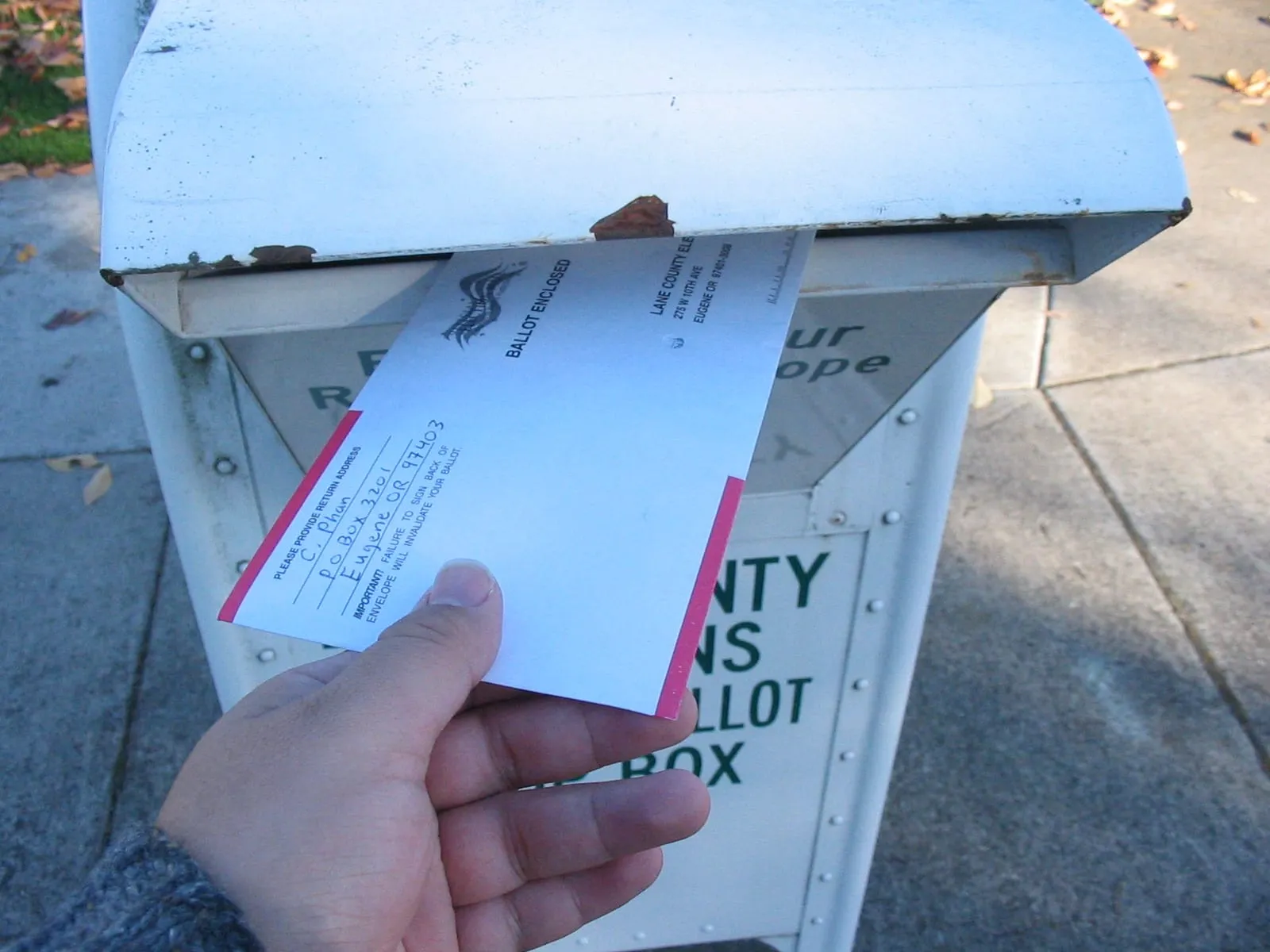
Reader, before you start: this article assumes you are a US citizen who lives or will be abroad and wants to vote in your last US state. It covers the paperwork, not who to vote for. Last reviewed 11/23/2026.
Not advice: general information from public sources. The author is not a lawyer. Election rules are set state by state, so check your state election office and FVAP.gov before you act.
What this guide covers
The November 3, 2026 election is over, so this is a guide for the next ones: 2027 special and state elections, 2028 primaries, and the general election on Tuesday, 11/07/2028 (2 U.S.C. § 7, accessed 2026-11-23). Overseas voting runs on two federal forms and a state ballot, and people mix them up.
You will get a four-step timeline, a decision table for FPCA versus FWAB versus the state ballot, the postmark-versus-receipt trap, and an honest account of what is unsettled after the August 2026 form changes.
Who can vote and where you register
The federal law behind all of this is UOCAVA, the Uniformed and Overseas Citizens Absentee Voting Act. FVAP’s state guides describe covered voters as including “other U.S. citizens residing outside the United States” (FVAP 2026-27 Voting Assistance Guide, New York, accessed 2026-11-23).
You vote through a state, not through the federal government. For most people that is the state of their last US residence. Two details from the New York and Washington guides apply broadly in the FPCA instructions:
- Your voting residence must be a street address. The guides say you “cannot use a post office box” as the voting residence.
- You “do not need to have any current ties with this address.” Your actual mailing address goes in a separate section, even if you want the ballot by email.
Citizens who have never lived in the US are a separate and unsettled case. See the section on the August 2026 changes below. Do not assume either way, because eligibility depends on state law.
Embassies help, but they are not polling places
FVAP’s FAQ says it plainly: you cannot vote at an embassy or consulate. Most will help you fill out the FPCA and FWAB. Many also take voted ballots for return through the diplomatic mail, but “each embassy/consulate will vary on dedicated hours and procedures,” so email or call first (FVAP FAQ, accessed 2026-11-23). The same FAQ says embassies can notarize or witness voting materials free of charge when your state requires it, per FVAP’s embassy and consulate page (accessed 2026-11-23). The State Department also keeps a Voting from Abroad page. It blocked my automated check, so I did not rely on it for any claim here.
The four-step timeline
| When | What to do | Source |
|---|---|---|
| Every January, and after any move | File a new FPCA | FVAP FAQ |
| At least 90 days before an election | Latest date FVAP recommends for the FPCA | FVAP FAQ |
| 45 days before a federal election | States must send ballots (waivers exist) | 52 U.S.C. § 20302 |
| 30 days before | No ballot yet? Send the FWAB | FVAP FAQ |
All accessed 2026-11-23.
Step 1: File the FPCA
The Federal Post Card Application (Standard Form 76) does two jobs: it registers you and requests your ballot. FVAP’s state guides say it covers “a minimum of all federal elections in the current calendar year” and tell you to “complete a new FPCA each year and every time your address changes” (FVAP guide, Washington, accessed 2026-11-23). The FVAP FAQ adds that you may get a ballot with state and local races too, depending on your state.
Get the form from FVAP’s online assistant or from the state guide. Sign and date it. The New York and Washington guides both say no witness signature is required, but other states may differ, so read your own state’s page.
Step 2: Choose email delivery, and know your state’s send rules
On the FPCA you pick mail, email or online, or fax for the blank ballot. Email is the fastest from overseas, and you must list the email address for it to work.
Here is a trap in the state guides. New York says that if you send the FPCA by email or fax “you must also mail the form.” Washington’s guide has no such sentence and lets you submit by mail, email or fax. Same federal form, different state rules (both guides accessed 2026-11-23). If you are in the New York situation, mail the original the same day you email the scan.
Step 3: Ballots go out 45 days before
Federal law requires the state to transmit your ballot “not later than 45 days before the election” when your request arrives at least 45 days out (52 U.S.C. § 20302(a)(8), accessed 2026-11-23). A state can get a hardship waiver, for example for a legal contest that delays ballot generation (§ 20302(g)). If your ballot has not shown up by the 45-day mark, look at your state’s ballot-status tool or call the local election office. The New York and Washington guides each link a tracker.
Step 4: Return the ballot
Return it by the route and date in your state’s “Federal Election Deadlines” chart in the FVAP guide. Washington’s guide says you can submit the state absentee ballot by mail, email or fax. Do not copy another state’s rule. The charts are state-specific, and the guide’s state data is stamped “current as of 11/2026” for New York and Washington, so recheck close to the election.
Ballot never came? When to use the FWAB
The Federal Write-In Absentee Ballot (Standard Form 186) is an emergency backup. The statute describes it as “a back-up measure to vote in elections for Federal office” for voters who “make timely application for, and do not receive” the state ballot (52 U.S.C. § 20303, accessed 2026-11-23).
| Situation | Form to use |
|---|---|
| Not registered, or registration out of date | FPCA (the FWAB can also register you where your state accepts it by the registration deadline) |
| Registered and requested, state ballot arrived | Use the state ballot |
| Requested on time, no ballot 30 days before the election | FWAB, as FVAP advises |
| Sent the FWAB, then the state ballot arrived | Return the state ballot too |
The 30-day trigger
FVAP’s FAQ says: if you completed the required steps and still have no ballot 30 days before an election, submit a completed FWAB. The statute has its own 30-day edge, which is different. A FWAB is not counted if your state ballot application arrived after the later of the state’s application deadline or 30 days before the general election (§ 20303(b)(2)). Late applicants cannot count on the FWAB to rescue them.
Sent both? Only one counts
The New York and Washington guides say the same thing: if you get the state ballot after sending a voted FWAB, “you may also vote and return the state absentee ballot. If both are received by the deadline, only the state absentee ballot will be counted.” The statute asks voters to make “every reasonable effort” to tell election officials they submitted more than one ballot (§ 20303(d)).
What a FWAB covers differs by state
Washington’s guide says you can use the FWAB to vote “in federal, state and local elections, including ballot measures.” New York’s says overseas citizens can use it “in all elections for office which you are eligible.” The statute itself speaks only of federal office. If you live in a different state, read its row before assuming local races are included.
New York also has a paperwork quirk: a printed FWAB needs two envelopes, one marked “Official Ballot” and a mailing envelope. Miss that and the ballot may not be accepted.
”Postmarked by” versus “received by”
This is the quiet reason overseas ballots fail. Some states count a ballot only if it arrives by a set date. Others count ballots postmarked by Election Day that arrive later. Your state’s row in the FVAP chart tells you which. I could not confirm a reliable count of states in each group from a primary source, so I am not publishing one.
On 06/29/2026 the Supreme Court decided Watson v. Republican National Committee (No. 24-1260), 5-4. The Court held that the federal Election Day statutes do not stop a state from counting mail ballots that are postmarked by Election Day and received afterward (opinion, accessed 2026-11-23). Read that carefully. It lets a state allow late arrival. It does not make any state do so. Your state’s own law still sets your deadline.
Practical rule: for a ballot mailed from abroad, assume the stricter reading. Mail it as soon as you vote it, and use email or fax return if your state offers it. FVAP’s FAQ notes that you pay postage only on foreign postal or commercial courier service. US mail, military mail or diplomatic pouch can use the postage-paid template on FVAP.gov.
What changed in August 2026, and what is unclear
Here is what I could confirm from official documents. The Department of Defense published two notices in the Federal Register on 09/10/2026, one for the FPCA (SF 76, OMB control number 0704-0503) and one for the FWAB (SF 186, OMB control number 0704-0502), each a 60-day comment request (accessed 2026-11-23). That puts the comment window’s end at about 11/09/2026. The notices do not describe the content changes.
What I could not confirm in an official document: news and advocacy coverage reports that the August revision removed the option for citizens who have never lived in the US. I found no primary text saying so, and I could not verify a current court order or any restoration of the old forms. Reports also disagree on whether state officials must accept older versions of the form.
| Question | What I can state | What to do |
|---|---|---|
| Is a new form version in circulation? | Federal Register notices exist for both forms (09/10/2026) | Download from FVAP.gov, not an old PDF |
| Are old versions accepted? | Reports conflict; no official document found | Ask your state election office |
| Can never-resided citizens vote? | Depends on state law | Check your state’s guide row |
If you are a never-resided citizen, ask your state election office directly before you file, and keep a copy of what you send.
Mistakes that get overseas ballots rejected
- A stale FPCA. The FPCA covers the current calendar year. Last year’s does not carry over.
- Mail-only states. New York wants the FPCA mailed even when you email it.
- A PO box as the voting address. The guides prohibit it. Use a street address for registration and a separate mailing address.
- Treating the FWAB as a first choice. It is a backup, and the state ballot wins if both arrive.
- Wrong return address or route. Use the local election office address in the “Local Election Offices” section.
- Skipping the date and signature. Both guides tell you to sign and date.
- Assuming the embassy will forward everything. Posts differ. Confirm hours and procedure first.
Voting and your other US obligations abroad
Casting a ballot is separate from your tax filing. The IRS says US citizens abroad are “subject to tax on worldwide income” and file under generally the same rules as at home (IRS, US citizens and resident aliens abroad, accessed 2026-11-23). I found no source linking voting to tax status either way, and this is not tax advice. If you are behind on those obligations, see our guides on FBAR, FEIE and Form 2555, applying for an ITIN from abroad, and streamlined filing.
Frequently asked questions
Can I vote at a US embassy or consulate?
No. FVAP says embassies are not polling places. Many will help you fill out the FPCA and FWAB, and some accept voted ballots for diplomatic mail. Check your post’s website first.
How often do I file the FPCA?
FVAP recommends a new one every January and after every move. The state guides say it covers all federal elections in the current calendar year at minimum.
Do I need a US address?
You need a US voting residence. The state guides say it must be a street address, not a PO box, and you do not need current ties to it. Your mailing address can be abroad.
What is the FWAB deadline?
It is set by your state in the “Federal Election Deadlines” chart. FVAP’s general trigger for sending it is 30 days before the election if your ballot has not arrived.
Can I vote in state and local races?
On the FPCA ballot, often yes, depending on your state. On the FWAB, Washington allows state and local races. New York allows offices you are eligible for. The statute covers federal office only.
What if my ballot arrives after I sent the FWAB?
Fill it in and return it too. If both arrive by the deadline, only the state ballot is counted (New York and Washington guides).
What if I moved to a different state?
File a new FPCA for the state where you now claim voting residence, and follow that state’s guide. Do not keep using the old state’s form.
Next steps
Put “refresh the FPCA” on your January calendar, and set a second reminder at 45 days before each election to check that the ballot arrived. Then open your state’s page in the FVAP guide and note the return method and deadline.
Sources (all accessed 2026-11-23 unless noted)
- FVAP 2026-27 Voting Assistance Guide, New York (current as of 11/2026)
- FVAP 2026-27 Voting Assistance Guide, Washington (current as of 11/2026)
- FVAP FAQ handout
- FVAP, embassy and consulate help
- 52 U.S.C. § 20302, ballot transmission
- 52 U.S.C. § 20303, federal write-in absentee ballot
- 2 U.S.C. § 7, Election Day
- Supreme Court, Watson v. RNC, No. 24-1260 (06/29/2026)
- Federal Register notice 2026-18479, FPCA
- Federal Register notice 2026-18473, FWAB
- IRS, US citizens and resident aliens abroad
Tagged
- #fpca
- #fwab
- #absentee-ballot
- #overseas-voting
- #us-expats
Read next
Keep going with related guides from the same track.
Why Foreign Banks Refuse Americans: FATCA and the W-9 Explained
A foreign bank asked if you're a US person or wants your SSN. What FATCA requires of the bank, why W-9 not W-8BEN, and your own FBAR and 8938 duties.
Long-Stay Visas & US Taxes: France, Portugal, Spain Explained
Your VLS-TS, D8, or Non-Lucrative Visa doesn't touch your IRS duty. Here's which government decides what, and what actually changes when you move.
Foreign Tax Credit vs. FEIE: Which Should US Expats Choose in 2026?
Living abroad and unsure whether to claim the Foreign Tax Credit (Form 1116) or the FEIE (Form 2555)? A 2026 decision guide for US expats, with the math.