Mexico Temporary Resident Visa: Requirements & Process (2026)
How to get Mexico's Temporary Resident Visa in 2026: the consulate-then-canje process, real income and savings thresholds, costs, timelines, and the pitfalls.
General information, not legal or tax advice — see full disclaimer .
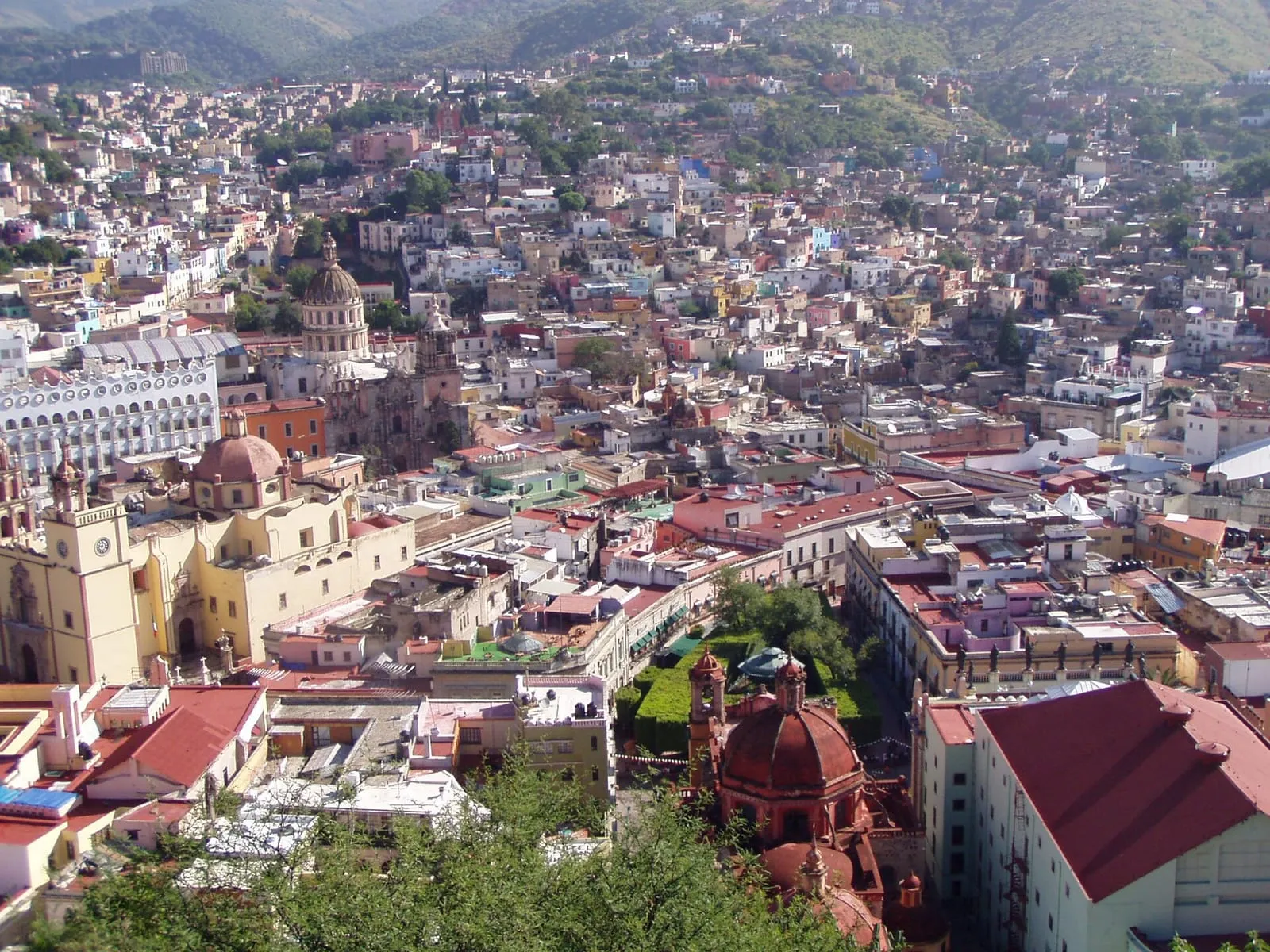
Reader, before you start: this is the route most people who call themselves “digital nomads in Mexico” actually use — there is no separate Mexican digital nomad visa. It assumes you’ll prove your own finances (income or savings), not that a Mexican employer is sponsoring you. If you have a Mexican job offer or a Mexican spouse, the thresholds and paperwork below change; we flag where.
What this guide covers
The Temporary Resident Visa (Residente Temporal) lets you live in Mexico for one to four years on the strength of your own money — foreign salary, freelance income, pension, or savings. It is the visa behind almost every “I moved to Mexico City / Oaxaca / Mérida” story you’ve read. Most of those stories skip the part that trips people up: it is a two-step process, and the second step has a 30-day clock.
- The two steps — consulate abroad, then canje at INM — and why you can’t skip the first
- The 2026 income and savings thresholds, what they’re pegged to, and why your consulate’s number differs from the next one’s
- A document checklist built around the question the consulate is actually asking
- Real costs (consulate fee plus the INM card fee that went up on January 1, 2026) and timelines
- The pitfalls that cost people their visa — the canje deadline, entering as a tourist, leaving mid-process
Last verified: June 10, 2026. Solvency figures vary by consulate and move with exchange rates; the INM card fees are fixed in pesos for 2026. Links to primary sources are inline and in the Sources list.
The one thing to understand first: it’s two steps
Mexican residency is not issued inside Mexico to someone who walks in as a tourist. It starts at a Mexican consulate in your home country and finishes at an immigration office inside Mexico. Miss this structure and nothing else makes sense.
Step 1 — The consulate abroad issues a visa. You book an appointment at the Mexican consulate that covers where you legally live, prove your finances, and — if approved — the consulate puts a visa sticker in your passport. That sticker is not residency. It is a single-entry visa, valid 180 days, whose only job is to let you enter Mexico once to start the real process.
Step 2 — INM exchanges it for your residency card (canje). Canje means “exchange.” After you enter Mexico on the sticker, you have 30 calendar days to file at an office of the Instituto Nacional de Migración (INM). You submit a form, pay the government fee, and give biometrics (photo, fingerprints, signature). INM then issues the physical Residente Temporal card — the plastic ID that actually makes you a resident — and your CURP (Mexico’s national ID number, which you’ll need for a bank account, a tax ID, a phone contract, almost everything).
If you remember nothing else: the visa gets you in; the card makes you a resident; the gap between them is 30 days.
The 2026 financial thresholds (and why every blog quotes a different number)
You qualify by proving economic solvency one of two ways. You need one of these, not both:
- The income route — regular monthly income over the last 6 months (some consulates ask for 12).
- The savings route — an average balance held over the last 12 months.
Here’s the part that confuses everyone. The legal basis is a multiple of Mexico’s UMA (Unidad de Medida y Actualización), which for 2026 is 117.31 pesos per day (set annually by INEGI; the 2026 value took effect in February 2026). Since a mid-2025 instruction, consulates calculate solvency from the UMA rather than the old minimum-wage figure. The standard multiples are roughly 680× UMA in monthly income (about 79,800 pesos) or 11,460× UMA in savings (about 1.34 million pesos).
But you will almost never see a peso figure at the appointment. Each consulate converts the UMA multiple into its own fixed local-currency number using its own exchange rate, then publishes that. So the threshold is genuinely different from one consulate to the next, and it changes when they update their PDF.
Two real, current examples to show the spread:
| Consulate (2026) | Income route | Savings route | Consulate fee |
|---|---|---|---|
| San Diego, USA | $4,510 USD/month (last 6 months) | $75,950 USD (last 12 months) | $56 USD, cash |
| London, UK | £3,084/month (last 6 months) | £51,976 (last 12 months) | paid at appointment |
Sources: Consulado de México en San Diego — Temporary Resident Visa, Economic Solvency (2026 PDF); London figures per the Consulado de México en Reino Unido.
What this means for you:
- Find your own consulate’s current requirements page and use its number. Do not trust a flat “$4,300” you read on a forum from 2023.
- Build in a buffer. Aim for 110–115% of the published figure — a balance that dips below the line for one month of the 12 can sink the savings route.
- Money must be in your own name. Joint accounts work if you’re the holder; a spouse’s account does not count for the principal applicant.
- Crypto and precious metals don’t count. Consulates want bank or regulated brokerage statements.
- Income evidence usually means bank statements showing the money landing, not just a contract or a screenshot of an invoicing dashboard.
A note on the savings vs income choice: retirees and people between contracts usually use the savings route. Active earners use income. If you can clear either, pick whichever gives you the cleaner paper trail — a steady salary deposit beats a savings balance you have to explain.
What “permanent” looks like from here
The Temporary Resident card is issued for one year first. You renew it inside Mexico (at INM, not the consulate) for additional periods up to a four-year total. After four years you cannot renew again — you convert to permanent residency or leave.
There are three ways people reach permanent residency, and they matter for planning:
- Four years of temporary → permanent. The standard path. Done inside Mexico; no new consulate trip.
- Straight to permanent via retirement. If you’re roughly retirement age and can prove pension income or savings at the higher permanent threshold, some consulates let you skip temporary entirely. The bar is much higher (think pension income around 7,400+ USD/month or savings near 300,000 USD), but it gets you indefinite status in one move.
- Family ties. Married to a Mexican or to a permanent resident? The route and timeline differ (often a 2-year path to permanent), with a different document set.
Permanent residency does not expire and is not renewed, and it lets you work for a Mexican employer without a separate permit. The temporary card does not — see the work note below. (For the full picture of all three routes, see Mexico permanent residency: retiree and family routes.)
Documents for the consulate appointment
Gather these before you book, because the appointment itself is short and unforgiving about missing items. Exact lists vary by consulate — yours publishes its own — but this is the standard core:
Identity and status
- Passport valid beyond your intended entry, plus a photocopy of the data page (and any pages with stamps).
- One recent passport-size photo, front view, white background, no glasses — to the consulate’s exact spec.
- Proof you legally live in the consulate’s jurisdiction if you’re not a citizen of that country (residence card, long-stay visa). You apply where you reside, not where you hold a passport.
Financial evidence (the part that gets applications rejected)
- Original bank statements for the required period, each carrying an official bank stamp or an accompanying bank letter. Plain online PDFs with no stamp are routinely refused.
- For the income route, statements showing the deposits landing; if it’s salary, a letter from your employer on letterhead stating your role, salary, and that you may work remotely from Mexico.
- Statements must show your name and address (no P.O. boxes), and the balance must stay above the threshold across the whole period.
Forms and fee
- The consulate’s visa application form, completed.
- The non-refundable consulate fee (around $48–$56 USD, e.g. $56 cash in San Diego). Confirm the exact amount and payment method — several consulates take cash only.
Documents issued elsewhere (a marriage certificate for the family route, say) usually need an apostille and a certified Spanish translation. Ask your consulate before you pay for translations you may not need.
The process, step by step
Step 1 — Confirm your consulate and book the appointment
Find the consulate covering your address and read its requirements page, not a generic one. Appointment lead times swing widely: a quiet post may see you in 1–3 weeks; busy US and European posts can be booked weeks to months out. Book as soon as your finances are in order — you can keep refining documents while you wait.
Step 2 — Attend the appointment
You’ll hand over the document set, pay the fee, and answer brief questions about why you’re moving and how you support yourself. The officer decides solvency on the spot in many cases. If approved, you typically collect the visa sticker within about 10 business days (some posts same-day).
Step 3 — Enter Mexico on the visa — and say why
The sticker is single-entry, valid 180 days. When you arrive in Mexico, make clear at immigration that you are entering to exchange a resident visa — not as a tourist. This matters: enter as a tourist and you can forfeit the residency process.
Step 4 — File the canje at INM within 30 days
Within 30 calendar days of your entry date, go to your local INM office, submit the Formato Básico, pay the card fee (next section), and give biometrics. Many offices have you start the request online first. The clock runs from the day you entered, not the day you get an appointment — so handle it in week one, not week four.
Step 5 — Collect your card and CURP
INM issues the Residente Temporal card and your CURP. Production ranges from same-day at some offices to about three weeks at busy ones. Until the card is in hand, don’t leave Mexico unless INM has given you a re-entry authorization — departing mid-canje can cancel the request.
Costs and timelines
The consulate fee and the INM card fee are separate. The INM card fees are fixed in pesos and rose on January 1, 2026 (INM — Tarifas de Derechos Migratorios 2026).
| Item | 2026 cost | Notes |
|---|---|---|
| Consulate visa fee | ~$48–$56 USD | Paid abroad at the appointment; often cash only |
| INM card — Temporary Resident, 1 year | $11,140.74 MXN | The canje fee for your first card |
| INM card — Temporary Resident, 2 years | $16,693.36 MXN | If you take a multi-year card |
| INM card — Temporary Resident, 3 years | $21,142.58 MXN | |
| INM card — Temporary Resident, 4 years | $25,057.82 MXN | |
| INM card — Permanent Resident | $13,578.96 MXN | For the eventual conversion |
| Apostille + certified translation | varies | Only if a foreign civil document is required |
| End-to-end | ~3–6 months | Consulate appointment → sticker → entry → card in hand |
New for 2026 — the 50% fee and “reasons for residence.” Under a decree published November 7, 2025, INM now charges these card fees at 100% by default and grants a 50% reduction only to applicants who prove their stay is for family unity, a registered job offer, or an invitation to a non-profit activity (Garrigues — INM adjusts 2026 government fees). Solvency-based applicants — most nomads and retirees — pay the full amount. INM also pushed officers to scrutinise the stated reason for residence more closely in 2026. INM does not take cash: you pay by bank window or ATM using a payment sheet generated beforehand.
After the card: your first month as a resident
The card kicks off a short paperwork chain — our post-arrival paperwork guide walks through the CURP, bank account, and RFC in order. The short version:
- Confirm your CURP is issued and correct — it gates everything below.
- Get an RFC (tax ID) from SAT if you’ll earn, invoice, or buy property in Mexico.
- Open a Mexican bank account — far easier with the card and CURP than as a tourist.
- Get a local SIM (Telcel, AT&T, Movistar) tied to your CURP-backed identity.
- Note your renewal date. You renew before the card expires, at INM, inside Mexico — diarise it 60 days out.
Common pitfalls — what they don’t tell you
Pitfall 1 — Missing the 30-day canje window
The single most common way to lose the visa. The 30 days run from your entry date, not your INM appointment. If local INM appointments are scarce, start the online request the week you land. Miss the window and the visa can be voided — meaning a fresh consulate application, fee included.
Pitfall 2 — Entering as a tourist
If you breeze through immigration and let them treat you as a tourist (or you fly in months before doing canje and re-enter as a visitor), you can forfeit the residency visa. Enter once, on the sticker, to do canje, and say so.
Pitfall 3 — Leaving Mexico before the card is printed
After you file the canje, your status is mid-process. Leaving without an INM-issued re-entry permit can cancel it. Plan to stay put from filing until the card is in your hand.
Pitfall 4 — Bank statements that “look right” but get refused
Online printouts without a bank stamp, statements with a P.O. box, accounts not in your name, a balance that dipped below the line in month seven of twelve — each is a routine rejection. Get stamped originals or a bank letter, and keep the balance clean for the full period.
Pitfall 5 — Assuming the temporary card lets you work locally
Solvency-based temporary residency lets you live in Mexico and work remotely for foreign clients. It does not authorise working for a Mexican employer or being paid by a Mexican company — that needs a separate work permit from INM (around 4,300 pesos) added to your card. Plenty of remote workers live here fine on the standard card; the line is whether the payer is Mexican.
Pitfall 6 — Chasing a “digital nomad visa” that doesn’t exist
There is no dedicated Mexican digital nomad visa. If a service offers you one, they mean this — the Temporary Resident Visa. Don’t pay extra for a renamed product. (For short stays, you’d just enter visa-free — but read how long you can actually stay in Mexico as a tourist first, because the 180-day stay is no longer automatic.) (If a long, work-anywhere stay without residency is what you want, compare Mexico with Portugal’s D8 digital nomad visa or Japan’s six-month digital nomad visa for Americans — both are genuinely different products with their own thresholds.)
Frequently asked questions
Can I apply for the Temporary Resident Visa from inside Mexico?
No. The visa is issued by a Mexican consulate abroad, in the country where you legally reside. You cannot convert a tourist entry into temporary residency from inside Mexico (narrow family-based exceptions aside). Plan to apply before you move.
How long does the whole thing take?
Plan for 3–6 months end to end: consulate appointment wait, about 10 business days for the sticker, then entry and the canje (card in days to weeks). The appointment backlog at your consulate is usually the biggest variable.
Income or savings — which is better?
Whichever you can prove cleanly. Active earners use the income route (6 months of deposits). Retirees and the between-contracts crowd use the savings route (12-month average balance). You only need to satisfy one.
Can my spouse and children come?
Yes. Dependents apply as family units alongside the principal applicant, with their own documents and proof of the relationship (marriage and birth certificates, usually apostilled). The principal’s solvency typically has to cover them, so the effective threshold rises per dependent — check your consulate’s family figures.
Does time on the temporary card count toward citizenship?
Yes. Legal residence (temporary and permanent) counts toward naturalisation, which generally requires five years of residency (two years if married to a Mexican or with a Mexican child), plus a Spanish and Mexican-culture exam. The four years of temporary residency feed directly into that clock.
Do I need to speak Spanish for the visa?
No. The visa and canje have no language test. You’ll need functional Spanish for daily life and for the citizenship exam later, but not to become a resident.
What if my income drops below the threshold after I’m resident?
The threshold is tested at application and renewal, not continuously. A mid-year dip won’t cost you the current card, but you must clear the bar again at renewal — keep your statements in order year-round.
Next steps
If Mexico is the plan, your highest-impact move this week is to pull up your own consulate’s Temporary Resident Visa page and read its exact solvency figure and document list — that single number decides whether you apply on income or savings, and how big a buffer you need. Everything else queues behind it.
For the bigger relocation picture — costs, healthcare, taxes, and first steps — see the Moving to Mexico in 2026 overview. If you’re still comparing destinations, weigh Mexico against a lower-cost base like Bali’s real monthly budgets, or against retirement-focused routes such as the Thailand retirement visa.
Sources
- Instituto Nacional de Migración (INM) — Tarifas de Derechos Migratorios 2026 — accessed 2026-06-10 (card fees, effective 1 Jan 2026)
- INM — Preguntas frecuentes para expedición de documento migratorio por canje — accessed 2026-06-10 (30-day canje window, biometrics)
- Consulado de México en San Diego — Visas / Temporary Resident, Economic Solvency (2026) — accessed 2026-06-10 (income $4,510/mo, savings $75,950, $56 fee)
- Consulado de México en Reino Unido (London) — accessed 2026-06-10 (UK solvency figures, 180-day single-entry visa, canje)
- Garrigues — INM adjusts government fees for 2026 and reinforces requirement to prove reasons for residence — accessed 2026-06-10 (50% reduced-fee rule, decree of 7 Nov 2025)
- Clark Hill — Mexico increases government fees for immigration procedures effective January 1, 2026 — accessed 2026-06-10 (full peso fee schedule)
- INEGI — Unidad de Medida y Actualización (UMA) — accessed 2026-06-10 (2026 UMA value 117.31 MXN)
Tagged
- #mexico-temporary-resident-visa
- #residente-temporal
- #mexico-residency
- #economic-solvency
- #inm-canje
Tools you'll likely need
Practical services for the steps in this guide. Optional — the official government route always comes first in the article above.
Disclosure: some links below may be affiliate links. If you sign up through them we may earn a commission at no extra cost to you. We only list services we'd recommend regardless, and this never changes what we write. More.
SafetyWing
Subscription travel-medical cover popular with nomads; monthly, cancel anytime.
IMG Global
US-based international medical insurer — strong fit for US citizens abroad.
Genki
Long-term travel health insurance that meets many visa cover requirements.
Cigna Global
Comprehensive international private medical insurance for longer relocations.
Read next
Keep going with related guides from the same track.
Mexico Permanent Residency: Retiree & Family Routes (2026)
Who qualifies for Mexico permanent residency in 2026 and how: the direct retiree route, the four-year temporary path, family ties, thresholds, and fees.
Watch the 2026 World Cup in Mexico Visa-Free (No US Visa)
Can't get a US visa for the 2026 World Cup? Mexico hosts matches too, and entry is far easier. Who gets in visa-free — and the catch for some nationalities.
How Long Can You Stay in Mexico? The 180-Day Rule (2026)
How long you can really stay in Mexico as a tourist in 2026: why 180 days is a maximum and not a default, the passport-stamp FMM, the fee, and overstay risks.